Compliance-Driven Commercial Cleaning Services
Clean Team’s compliance-driven cleaning protects regulated facilities. OSHA-, HIPAA- & CDC-trained staff use EPA-approved products and detailed documentation.
Defining Compliance Cleaning
In regulated environments like hospitals, manufacturing plants, and government facilities, "clean" means more than a tidy appearance. It means meeting strict requirements set by agencies such as OSHA, HIPAA, and the CDC.
Healthcare facilities require far more than standard janitorial services. Clean Team provides certified, compliant, and results-driven medical facility cleaning built around infection-control protocols and federal standards. Regulatory agencies place firm requirements on how healthcare environments must be cleaned. Certification ensures that cleaning personnel are qualified to work in medical facilities and apply infection control techniques that meet federal and accreditation standards.
In manufacturing and industrial facilities, Clean Team uses the 5S cleaning method and develops tailored programs to keep high-traffic areas safe and efficient. Throughout all environments, compliance cleaning incorporates safety training, documentation, and the correct use of EPA-registered disinfectants.
Why Regulated Environments Face High Liability
Compliance failures carry real consequences. Failure to comply with guidelines set by agencies like the CDC, OSHA, and the Joint Commission can result in failed audits, legal risks, and increased healthcare-associated infections (HAIs).
In manufacturing settings, unsafe cleaning practices can increase slip hazards or chemical exposures, potentially leading to accidents and insurance claims. Germs lingering on high-touch surfaces can cause illness outbreaks, disrupting operations and damaging your company's reputation.
A compliance-driven program protects occupants and staff. It also helps your business avoid citations and preserve credibility.
What Makes Commercial Cleaning "Compliant"?
Cleaning vs. Disinfection vs. Sanitization

Cleaning
Healthcare cleaning goes beyond routine janitorial work. Our professionals have extensive knowledge of aseptic cleaning and understand the differences between clean, contamination-free, and sterile environments.

Disinfection
Cleaning removes soils and debris, while disinfection uses EPA-registered products to kill pathogens. Clean Team uses disinfectants on the EPA's List N. Several have a 60-second dwell time to inactivate SARS-CoV-2.

Sanitization
In medical settings, high-touch surfaces such as nurse stations, exam tables, and waiting rooms receive high-touch surface disinfection cycles to ensure thorough pathogen control. By tailoring protocols for each area and using electrostatic spraying for even coverage, Clean Team ensures that cleaning and disinfection meet regulatory standards.
Documentation & Accountability
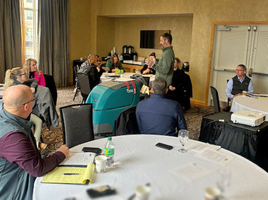
Tell-Show-Do-Review training method and checklists
Employees are extensively trained using this approach before they begin cleaning a building. All staff follow in-house training videos and checklists covering customer service, safety (including bloodborne pathogen training), proper chemical usage, and restroom procedures.

Electronic timekeeping and inspections
The Chronotek system records employee clock-in and clock-out times. We know who is working, where they are working, and when they arrived and left. Supervisors and managers provide formal inspections and monthly site reviews

CleanTelligent quality-control platform
For healthcare facilities, Clean Team uses CleanTelligent to document work orders, capture photographic evidence of completed tasks, and enable clear communication between service teams and facility managers. This transparency supports audit preparation and continuous improvement.

Safety Data Sheets (SDS) binder
Every supply closet is equipped with an organized binder of Safety Data Sheets so clients always know which products are in use. Maintaining SDS records helps clients meet OSHA and EPA requirements.
Through logs, checklists, and digital audit trails, Clean Team provides the documentation regulators require, so you get peace of mind.
OSHA-Aware Commercial Cleaning Practices
Workplace Safety and Cross-Contamination
OSHA sets strict federal standards to protect workers. Clean Team integrates those regulations into every aspect of our service.
Our technicians are trained in PPE protocols, bloodborne pathogen procedures, and chemical safety. We use EPA-registered products with up-to-date Safety Data Sheets and compliant labeling. We maintain tools and machinery according to OSHA best practices. We emphasize on-site safety with wet-floor signs and slip-resistant cleaning methods.
Ongoing staff safety training, routine internal audits, and adherence to CDC and OSHA guidelines are part of our commitment to compliance. These measures minimize cross-contamination and reduce the risk of slips, chemical spills, or other workplace hazards.
Cleaning for Manufacturing & Industrial Environments
Manufacturing facilities often operate around the clock. Hundreds of employees move through restrooms, break rooms, and entrance areas. Clean Team begins each partnership with a thorough evaluation of your facility's size, staffing levels, and usage patterns to develop a tailored program.
Typical programs include:
Day porters to address high-priority areas during active shifts
Night cleaning teams for deeper cleaning
Scheduled maintenance to prevent build-up in high-traffic areas
We employ the 5S cleaning method—Sort, Set in Order, Shine, Standardize, and Sustain—to organize facilities and ensure consistent results.
For specialized floor maintenance, we provide machine scrubs, burnishing/top scrubbing, and annual stripping and waxing to maintain epoxy, ceramic tile, and VCT floors. High-level vacuuming with HEPA-filtered SpaceVac systems allows dust removal up to 50 feet without ladders, ensuring compliance and cleaner air.
By combining safety protocols with tailored cleaning strategies, Clean Team helps manufacturing and industrial facilities meet OSHA standards and operate efficiently.
HIPAA-Conscious Cleaning For Healthcare FacilitiesProtected Areas & Surfaces
Hospitals, outpatient centers, and private practices require specialized cleaning that supports infection control, accreditation, and patient satisfaction.
Clean Team services hospitals, infusion centers, surgical centers, group practices, laboratories, and more. We emphasize risk-based cleaning frequency by area. Operating rooms and procedure rooms require more frequent disinfection than administrative areas.
High-touch surfaces such as waiting room chairs, nurse stations, and exam tables receive dedicated disinfection cycles to break the chain of infection. The team uses EPA-registered, hospital-grade disinfectants selected by pathogen risk and employs electrostatic disinfection technology for thorough, even coverage.
Staff Training & Confidentiality Awareness
In healthcare settings, compliance extends beyond cleanliness to privacy.
All Clean Team staff servicing medical facilities receive OSHA Bloodborne Pathogen Training, HIPAA awareness training, and infection control certification. Ongoing education keeps cleaners current on regulatory and microbiological developments.
To protect patient privacy, cleaning staff sign confidentiality agreements and are trained to avoid screens, documents, and digital devices unless explicitly approved. These HIPAA-aligned procedures prevent inadvertent exposure of protected health information (PHI) and support institutional compliance.
CDC-Guided Disinfection StandardsHigh-Touch Surface Protocols
Germs spread easily via high-touch surfaces. Bacteria and viruses linger on surfaces such as light switches, door handles, keyboards, elevator buttons, and touch screens. Infected surfaces can trigger illness outbreaks that disrupt operations and damage your company's reputation.
Clean Team implements high-touch surface disinfection cycles, particularly in medical environments. We use electrostatic spraying to deliver uniform coverage on these surfaces. Electrostatic fogging coats surfaces within five minutes and leaves them dry in about ten minutes, preventing moisture damage to sensitive equipment.
Approved Products & Application Methods
All disinfectants used by Clean Team appear on the EPA's List N. Examples include Husky 802, 892, 800, 805, and 891. Several offer 60-second dwell times to inactivate SARS-CoV-2. The team monitors emerging viral strains to ensure that our disinfectants remain effective.
We also offer electrostatic spraying services, which provide rapid, uniform application and kill pathogens up to ten times faster than conventional methods. For healthcare environments, Clean Team selects EPA-registered disinfectants tailored by pathogen risk and applies them with electrostatic technology to ensure thorough coverage.
Industries That Require Compliance-Driven Cleaning
Many sectors must meet stringent cleaning standards to operate safely and legally.
Healthcare & Medical Offices
Medical facility cleaning services encompass hospitals, infusion centers, surgical centers, group practices, dialysis centers, laboratories, ambulatory surgery centers, and more. Cleaning programs align with CDC guidelines, Joint Commission requirements, and OSHA hazard communication protocols.
Manufacturing & Industrial Facilities
Tailored programs for manufacturing plants, automotive manufacturing, steel fabrication, foundries, metal fabrication, tool-and-die facilities, and factories. OSHA-compliant practices include PPE training, safe chemical handling, and on-site safety measures.
Food Production Facilities
High-level vacuuming with HEPA filters ensures compliance and cleaner air.
Laboratories
Clean Team services clinical laboratories and medical offices, and follows infection control protocols.
Schools & Childcare Centers
Commercial disinfection services for educational institutions, where high-touch surfaces are common, and outbreaks can disrupt learning.
Government Buildings
OSHA-compliant cleaning for government facilities.
Consequences Of Non-Compliant Cleaning
Compliance is not optional.
In healthcare settings, failure to meet CDC, OSHA, and Joint Commission guidelines can result in failed audits, legal risk,s and increased HAIs. Untrained staff may mishandle chemicals or leave surfaces inadequately disinfected, leading to insurance claims, employee illness, or cross-contamination.
Germs on high-touch surfaces can spread illnesses that reduce productivity and damage your business's reputation. Poor floor maintenance or a lack of wet-floor signage can cause slip injuries. Lack of SDS documentation can invite citations.
Compliance-driven cleaning mitigates these risks by embedding regulatory standards into every task and providing the documentation needed to prove it.
At Clean Team, you know you're getting the cleanest results with the confidence of compliance.
How Clean Team Supports Compliance Requirements
Clean Team is your partner in compliance. Key elements of our approach include:
Comprehensive training – Employees undergo ongoing training through videos, checklists, and the Tell-Show-Do-Review method. Staff assigned to medical facilities receive OSHA bloodborne pathogen training, HIPAA awareness training, and infection control certification. Our industrial technicians learn PPE protocols, chemical safety, and equipment use.
Documentation and accountability – Clean Team uses Chronotek for timekeeping, monthly inspections, and digital quality control platforms like CleanTelligent for healthcare accounts. Safety Data Sheets are organized in supply closets. Confidentiality agreements protect sensitive information.
Consistent protocols – We follow standardized procedures such as the 5S cleaning method for manufacturing facilities and risk-based cleaning frequencies for different areas in healthcare. We utilize EPA-registered, List N disinfectants with proven dwell times and adopt electrostatic spraying for efficient coverage.
Scalable programs – Clean Team services facilities ranging from small offices to multi-site national accounts. We tailor programs based on your facility size, staffing levels, and usage patterns. Day porters and night crews support continuous operations, while specialized crews handle floors, windows, and high-level dusting.
Clean Team's commitment to compliance is reinforced by membership in professional organizations such as the Building Service Contractors Association International (BSCAI) and recognition through safety awards. We provide general liability and workers' compensation coverage for healthcare clients. We maintain a 95% customer retention rate thanks to consistent quality and proactive management.
These measures illustrate a culture of safety, accountability, and customer care.
Request A Compliance-Focused Cleaning Assessment
Whether you manage a hospital, laboratory, manufacturing plant, or government office, regulatory compliance should never be an afterthought.
Clean Team integrates OSHA, HIPAA, and CDC guidelines into every cleaning plan. We back up our work with comprehensive documentation.
Contact Clean Team today to request a compliance-focused cleaning assessment and discover how a customized program can protect your people, satisfy auditors, and keep your business running smoothly.